
Features |
Identification |
Component Locations |
How it Works
Exhaust Gas Recirculation
An Exhaust Gas Recirculation (EGR) system is used with the MPI system. The EGR system is used
to reduce nitrous oxide (NOx) emissions. The system recirculates a small portion of exhaust
gas into the intake mixture.
The exhaust gas is non-combustible and takes up a small space in the intake charge. The result
is lower combustion temperatures and reduced NOx.
The EGR does not operate at idle because NOx emissions are low during this time.
The following inputs are used for the EGR system:
- Engine speed
- Engine load
- Engine coolant temperature
- Signal from idle switch
The Exhaust Gas Recirculation is controlled by the ignition map in the MPI control unit. This
allows precise regulation of the exhaust gas recirculation flow.
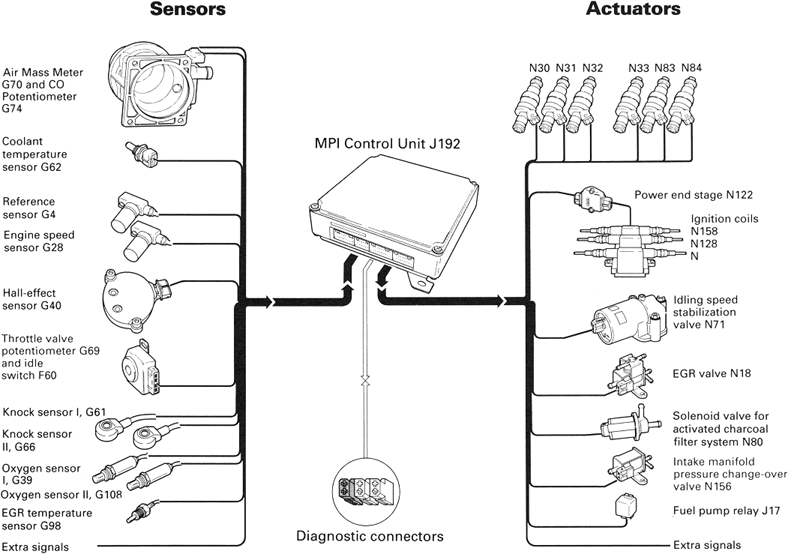
An EGR Frequency Valve (N18) is connected to the intake manifold and operated by the MPI
control unit. The frequency valve regulates the amount of vacuum supplied to the EGR
valve.
By regulating the amount of vacuum to the EGR valve, its opening position and therefore the
amount of exhaust gas recirculated can be accurately controlled.
The valve is located under the Mass Air Flow (MAF) sensor next to the intake manifold
changeover valve.
|
|
|
Substitute Function
Thereare no substitute functions for the EGR frequency valve. If the valve does not receive
power or ground, exhaust gas recirculation will not occur.
Self-diagnosis
The ECU recognizes the following:
- Short circuit to positive
- Open circuit/short to ground
|
EGR Temperature Sensor G98
The EGR temperature sensor is located on the outlet side of the EGR valve. The sensor
is used to inform the MPI control unit that the EGR valve is functioning.
The sensor measures the temperature of the recirculated exhaust gas. The EGR temperature
sensor is for fault recognition only.
If the EGR valve, temperature sensor, or wiring fails, the fault is stored in the MPI
control unit's permanent fault memory and the 'check engine' light illuminates.
|
|
|